

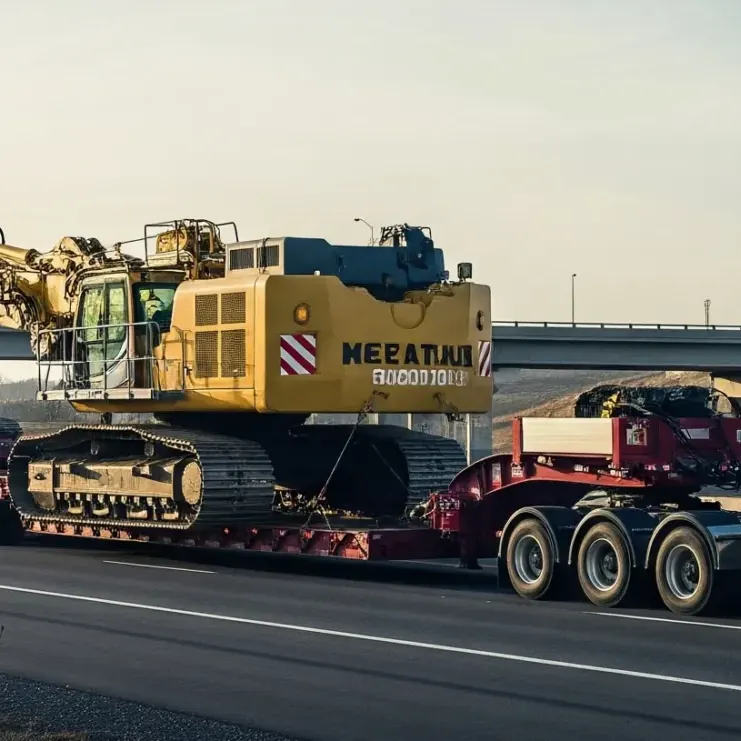
Semi Truck and Commercial Vehicle Transport
Trucks, buses and vocational vehicles hauled on step deck, RGN and lowboy trailers in all 48 states
Quick answer
Should a commercial truck be driven or hauled?
Hauling a truck on a trailer adds no miles and no wear, and it is the only option for units that do not run or are not road-legal. Most trucks and buses ride on a step deck or RGN, chosen so the unit stays under the height limit. A non-running unit has to be winched on, so the carrier needs to know before dispatch.
Updated November 2026 by the Quickway Transports broker team (FMCSA MC# 1245224).
Hauling a truck instead of driving it
A truck hauled on a trailer adds no miles and no wear, needs no driver of its own, and can move even when it does not run or is not registered. Most day cabs, box trucks and buses ride on a step deck or RGN, picked so the vehicle's height plus the deck stays under the legal limit, 13 ft 6 in in most eastern states.
Tall or heavy units change the plan: a dump truck, mixer or bucket truck may need an RGN and a height permit. Non-running units are winched on, so the carrier needs a winch-equipped trailer. We book the carrier, confirm the trailer suits the vehicle, and arrange any permit through the carrier's permit service.
FMCSA Licensed
Broker MC# 1245224
Running or not
Winch trailers for dead units
Step deck or RGN
By vehicle height
Free Quotes
Commercial shippers
Commercial Vehicles We Arrange Transport For
Semi Trucks & Day Cabs
Day cabs, sleepers and tractors on RGN or step deck trailers for fleet relocations, dealer transfers and units that cannot be driven.
Dump Trucks & Vocational Trucks
Dump trucks, mixers and vocational chassis are tall and heavy, so they usually ride on a lowboy or RGN.
Box Trucks & Straight Trucks
Box trucks, straight trucks and medium-duty vehicles for fleets, rental companies and dealers.
Buses & Coaches
Transit, school and shuttle buses and motor coaches on a trailer chosen for their length and height, running or not.
Tow Trucks & Emergency Apparatus
Wreckers, recovery trucks, fire apparatus and utility trucks that are out of service or would put too many miles on the chassis.
Non-Running & Dead Units
Vehicles that will not start or cannot be driven legally, winched on and secured for repossessions, salvage and rebuild moves.
Commercial Truck Transport Questions
Can you transport a non-running or dead truck?
What trailer does a semi truck need?
What commercial vehicles can you ship?
How much does commercial truck transport cost?
Do you move fleets of trucks?
Sources
We last checked the figures above against these official sources in November 2026. Before each move, the carrier's permit service confirms the rules in force that day.
Get a Commercial Vehicle Transport Quote
Free commercial vehicle transport quote
Tell us the vehicle type and whether it runs, and we'll match it to the right trailer, arrange any permits, and coordinate the carrier. Free quote, all 48 states.
Keep reading
- Heavy Equipment Transport →Which trailer, permits and preparation each kind of construction, farm, mining and industrial machine needs.
- Excavator Transport →RGN and lowboy moves for excavators, and which buckets, thumbs and counterweights come off before loading.
- Bulldozer Transport →Dozer moves from compact crawlers to mining-class machines like the Cat D11, with blade and ripper removal.
- Crane Transport →Cranes moved in travel configuration or broken down into several loads, with superload permits where needed.
- Mining Equipment Transport →Haul trucks, loaders, drills and crushers, often shipped in pieces under superload permits to remote sites.
- Agricultural Equipment Transport →Combines, wide planters, sprayers and tractors, with header removal and harvest-season timing.